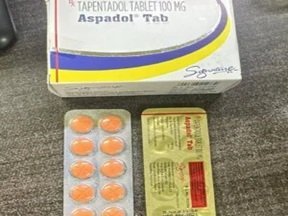
BUy Tapentadol 100 mg Online WIth EXpress Shipping
Tapentadol 100 mg is a prescription medicine used for the management of certain types of moderate to severe pain. Because it has opioid activity and can cause dependence, sedation, respiratory depression, and other serious adverse effects, it should only be used under the supervision of a qualified healthcare professional.
The availability of prescription medicines through online pharmacies has made it easier for patients to access legitimate healthcare services, but it has also created new risks. Some websites sell medicines without appropriate prescriptions, provide counterfeit products, conceal their ingredients, or operate without proper pharmacy authorization. For medicines such as tapentadol, these risks are particularly important because an incorrect strength, contaminated product, or inappropriate combination with another medicine can result in serious harm.

This guide explains what tapentadol 100 mg is, why it is prescribed, how it should be used responsibly, potential side effects, important interactions, dependence and withdrawal risks, and what patients should consider when obtaining prescription medicines from an online pharmacy.

What Is Tapentadol 100 mg?

Tapentadol is a centrally acting prescription analgesic. It has two principal pharmacological actions: it activates opioid receptors and inhibits the reuptake of norepinephrine. These mechanisms contribute to its ability to reduce pain.

The 100 mg strength is one of the available tablet strengths in some formulations and markets. However, the appropriate strength depends on the individual patient's medical circumstances, previous exposure to opioids, kidney and liver function, other medicines, type of pain, and the particular tapentadol formulation prescribed.

A 100 mg tablet should therefore never be treated as a standard dose for everyone. A higher strength is not necessarily more appropriate or more effective, and taking more medicine than prescribed can substantially increase the risk of adverse effects.

Tapentadol may be prescribed for certain acute or chronic pain conditions when a healthcare professional determines that an opioid-containing treatment is appropriate. Some formulations have specific indications, so patients should check the prescribing information supplied with their particular product.

Why Is Tapentadol Prescribed?

Pain can have many different causes, and treatment depends on its severity, duration, underlying condition, and effect on daily activities.

Tapentadol may be prescribed when a clinician believes that opioid analgesia is appropriate. In some circumstances, it may be considered when other pain-management approaches have not provided sufficient relief or are unsuitable.

The goal of treatment is not simply to eliminate every sensation of pain. A healthcare professional generally considers whether the expected improvement in pain and function outweighs the potential risks associated with an opioid medicine.

Patients should discuss the underlying cause of their pain with their healthcare professional rather than attempting to select an opioid based solely on its strength or perceived effectiveness.

Tapentadol 100 mg and Prescription Requirements

Tapentadol is a prescription medicine, and the legal requirements governing its possession, dispensing, prescribing, and online sale vary between countries and jurisdictions.

A legitimate online pharmacy should have a process for verifying a valid prescription when the medicine requires one. Depending on the healthcare system, the prescription may be transmitted electronically by an authorized prescriber or provided through another legally accepted method.

A website that promises to supply tapentadol without an appropriate prescription should be treated with caution. A lack of prescription requirements is not a convenience that makes an online pharmacy better; it can be a warning sign that the seller may not be operating within applicable pharmaceutical regulations.

Patients should also be cautious of websites that claim to diagnose pain conditions without appropriate clinical evaluation or that encourage customers to select a dose themselves.

How to Use Tapentadol Responsibly

Tapentadol should be taken exactly as directed by the prescribing healthcare professional. Patients should read the medication guide or product information supplied with their medicine and ask a pharmacist or doctor if anything is unclear.

Important principles include:
-
Take only the amount prescribed.
-
Follow the prescribed schedule.
-
Do not take additional doses simply because pain has returned.
-
Do not share tapentadol with another person.
-
Do not alter the formulation unless a healthcare professional specifically tells you to do so.
-
Do not combine it with other medicines without checking for interactions.
-
Do not stop long-term treatment suddenly without medical advice.
-
Keep the medicine away from children and other people who could accidentally take it.
Different tapentadol formulations can have different instructions. Immediate-release and extended-release products should not automatically be treated as interchangeable. Patients should always follow the instructions for the exact product prescribed to them.

Why the Tapentadol 100 mg Strength Requires Care

The term “100 mg” describes the amount of tapentadol contained in a particular dosage unit; it does not determine whether that amount is suitable for a particular patient.

Several factors can affect opioid safety. These include age, previous opioid exposure, respiratory conditions, other medicines, alcohol use, liver or kidney problems, and individual sensitivity to opioids.

A person who has never taken an opioid may respond differently from someone who has developed opioid tolerance. For that reason, patients should never increase their dose because a particular strength appears to be available online.

If pain remains uncontrolled, the appropriate response is to contact the prescribing clinician. The healthcare professional may reassess the diagnosis, treatment duration, dosage, formulation, or alternative therapies.

Common Side Effects

Like other prescription medicines, tapentadol can cause side effects. Some are relatively common, while others require urgent medical attention.

Possible side effects can include:
-
Nausea
-
Vomiting
-
Dizziness
-
Sleepiness
-
Headache
-
Constipation
-
Dry mouth
-
Fatigue
-
Reduced alertness
Not everyone experiences these effects, and their severity can vary.

Dizziness and drowsiness are particularly important because they can affect driving, operating machinery, balance, and concentration. Patients should understand how tapentadol affects them before participating in activities that require full alertness.

If side effects are persistent, severe, or concerning, the patient should contact a healthcare professional.

Serious Risks of Tapentadol

Tapentadol can produce serious opioid-related complications. One of the most important is respiratory depression, in which breathing becomes unusually slow, shallow, or ineffective.

The risk may increase when tapentadol is combined with other substances that suppress the central nervous system.

Signs of a potentially life-threatening opioid overdose can include:
-
Extreme sleepiness or inability to wake
-
Slow, shallow, or irregular breathing
-
Unusual snoring or choking sounds
-
Very small pupils
-
Loss of consciousness
-
Blue, gray, or pale lips or skin
A suspected opioid overdose is a medical emergency. Emergency medical services should be contacted immediately. Where legally and medically appropriate, naloxone can be used to reverse opioid overdose while emergency assistance is obtained.

Tapentadol and Alcohol

Alcohol can increase the sedating and respiratory-depressant effects of opioid medicines.

Combining tapentadol with alcohol may therefore increase the risk of severe drowsiness, impaired coordination, loss of consciousness, respiratory depression, and potentially fatal overdose.

Patients taking tapentadol should discuss alcohol use with their healthcare professional and should not assume that a small amount is automatically safe.

Tapentadol and Other Medicines

Drug interactions are an important consideration when using tapentadol.

Particular caution may be necessary with other medicines that cause sedation or respiratory depression, including certain sleeping medicines, tranquilizers, sedating antihistamines, and other opioid medicines.

Tapentadol also has clinically important considerations involving medicines that affect serotonin and norepinephrine pathways. Depending on the combination, there may be a risk of serotonin syndrome or other adverse reactions.

Patients should provide their doctor and pharmacist with a complete list of prescription medicines, non-prescription medicines, supplements, and recreational substances they use.

Never assume that a medicine is safe to combine with tapentadol simply because both products are legally available.

Dependence, Tolerance, and Addiction

Tapentadol is an opioid, so physical dependence and tolerance can develop with continued use.

Tolerance means that the body becomes accustomed to a medicine and may require a different treatment approach over time. Physical dependence means that stopping the medicine suddenly after regular use can produce withdrawal symptoms.

Addiction is different from physical dependence. It involves compulsive use despite harmful consequences and difficulty controlling use.

Patients should not feel ashamed about discussing concerns about dependence or problematic medication use. Healthcare professionals can help develop a safer treatment strategy.

People with a history of substance-use problems should tell their healthcare professional before starting an opioid medicine so that appropriate safeguards and alternatives can be considered.

Stopping Tapentadol

Patients who have been taking tapentadol regularly should not abruptly discontinue treatment unless specifically instructed to do so by a healthcare professional.

Sudden discontinuation after prolonged or repeated use may result in withdrawal symptoms. These can include restlessness, anxiety, sweating, sleep disturbance, nausea, abdominal discomfort, muscle aches, and other symptoms.

A clinician can determine whether the medicine should be reduced gradually and can create an individualized plan when discontinuation is appropriate.

The safest approach is to treat changes in opioid therapy as a medical decision rather than attempting to manage withdrawal independently.

Buying Tapentadol Online With a Prescription

Searching for “tapentadol 100 mg online with prescription” may lead patients to legitimate pharmacies as well as unsafe or illegal websites.

The presence of an online storefront does not prove that a pharmacy is legitimate.

Before obtaining a prescription medicine online, patients should verify that the pharmacy is properly licensed or authorized in the jurisdiction where it operates and that there is a legitimate mechanism for prescription verification.

A trustworthy online pharmacy should provide clear information about its business identity, licensing or regulatory status, pharmacist availability, contact information, and prescription requirements.

Patients should be cautious when a website:
-
Offers prescription opioids without requiring a prescription.
-
Promises unusually low prices.
-
Claims that no medical consultation is necessary.
-
Encourages customers to bypass local regulations.
-
Provides vague or incomplete contact information.
-
Does not identify the responsible pharmacy or pharmacist.
-
Makes exaggerated claims about guaranteed pain relief.
-
Requests unusual payment methods without providing appropriate documentation.
-
Sells numerous prescription-controlled medicines with little or no clinical screening.
These warning signs do not prove that every such website is fraudulent, but they should prompt the patient to stop and verify the seller independently.

How to Verify an Online Pharmacy

Online pharmacy regulation differs between countries. Patients should use the official pharmacy regulator or licensing authority applicable to their location to verify the pharmacy's credentials.

Do not rely solely on a badge, logo, certificate image, or statement displayed on the pharmacy's own website. Fraudulent websites can copy legitimate logos and regulatory information.

Where possible, verify the pharmacy through an independent government or professional regulatory database.

Patients should also make sure the name and address of the pharmacy match the information contained in the regulatory record.

A legitimate pharmacy should generally be willing to answer questions about prescriptions, pharmacists, medicine sourcing, and patient safety.

Counterfeit Tapentadol and Online Medicine Risks

One of the major risks associated with unregulated online medicine sellers is counterfeit medication.

Counterfeit tablets can contain the wrong active ingredient, an incorrect dose, unexpected substances, or no active ingredient at all. Some counterfeit medicines may look almost identical to genuine products.

The danger is particularly significant with opioid medicines because an unexpectedly high opioid dose or an unknown sedative ingredient can cause severe respiratory depression.

Patients should not rely on appearance alone to determine whether a tablet is genuine. If there is any concern about the authenticity of a medicine, contact a pharmacist or healthcare professional before taking it.

Price Should Not Be the Only Consideration

Patients understandably want affordable healthcare, but the lowest advertised price should not be the primary factor when selecting an online pharmacy.

A legitimate pharmacy must operate within pharmaceutical, prescription, storage, dispensing, and patient-safety requirements. Those responsibilities have costs.

An unusually cheap prescription opioid may indicate counterfeit medicine, an unauthorized seller, an incorrect formulation, or another serious problem.

The better approach is to compare legitimate pharmacies based on authorization, prescription procedures, pharmacist access, transparent pricing, delivery practices, and patient support.

What Information Should You Give Your Pharmacist?

A pharmacist can provide more useful advice when they have an accurate medication history.

Before receiving tapentadol, patients should disclose:
-
Current prescription medicines
-
Over-the-counter medicines
-
Vitamins and supplements
-
Previous opioid use
-
Known medication allergies
-
Relevant medical conditions
-
History of breathing problems
-
Other substances that may cause sedation
-
Previous problems with dependence or medication misuse
Patients should also explain whether the pain is new, persistent, worsening, or associated with other symptoms.

Tapentadol and Driving

Tapentadol may cause drowsiness, dizziness, impaired concentration, and slower reaction times.

For this reason, patients should not drive or operate machinery until they know how the medicine affects them and have confirmed that driving is appropriate under their circumstances.

The risk can be greater when tapentadol is combined with alcohol, sedatives, or other medicines that affect alertness.

Even if a patient feels accustomed to the medication, impairment can still occur.

Storage and Safe Handling

Tapentadol should be stored according to the product instructions.

Keep it in a secure location that is inaccessible to children, visitors, and anyone for whom it was not prescribed.

Because opioid medicines can be misused, patients should avoid leaving tablets in easily accessible locations.

Unused medicine should not automatically be given to another person. Disposal should follow local pharmaceutical disposal recommendations.

What to Do If You Miss a Dose

The appropriate response to a missed dose depends on the specific tapentadol formulation and prescribing instructions.

Patients should consult the medication guide or pharmacist rather than automatically taking an extra tablet.

Taking additional medicine to compensate for a missed dose can increase the risk of excessive opioid exposure.

If missed doses occur frequently, it may be helpful to discuss the treatment schedule with the prescribing healthcare professional.

What If Tapentadol Does Not Control the Pain?

Pain that remains severe despite prescribed treatment should be discussed with the treating clinician.

Patients should not independently increase the dose, take the medicine more frequently, or combine tapentadol with another opioid.

Persistent pain may indicate that the underlying condition requires reassessment. A healthcare professional can determine whether the diagnosis, treatment plan, dose, or non-opioid pain-management strategy needs to be changed.

Pain management can involve several approaches, including physical therapy, treatment of the underlying condition, psychological strategies, non-opioid medicines, and other interventions depending on the diagnosis.

Responsible Online Prescription Purchasing

A responsible online purchasing process should begin with healthcare rather than with a product search.

The patient should first receive an appropriate medical assessment and prescription when indicated. The prescription can then be filled through a pharmacy that is legally authorized to dispense the medicine.

The online pharmacy should use appropriate prescription verification and provide access to professional advice.

Patients should also receive appropriate information about the medicine, including instructions, precautions, potential interactions, and what to do if adverse effects occur.

Convenience is useful, but it should never replace clinical oversight.

Frequently Asked Questions

Can I buy tapentadol 100 mg online with a prescription?

Prescription medicines may be available through legitimate online pharmacies where permitted by local law. Patients should use an authorized pharmacy and provide a valid prescription when required. Rules differ between countries, so the applicable pharmacy regulator should be consulted.

Is tapentadol 100 mg suitable for everyone?

No. The appropriate medicine and strength depend on the individual's medical history, type of pain, previous opioid exposure, other medications, and other clinical factors. A healthcare professional must determine whether tapentadol is appropriate.

Can I take more than prescribed if my pain is severe?

No. Taking more tapentadol than prescribed can increase the risk of overdose, respiratory depression, excessive sedation, and other serious complications. Contact the prescribing clinician if pain is not adequately controlled.

Can tapentadol be taken with alcohol?

Alcohol can increase opioid-related sedation and respiratory depression. Patients should discuss alcohol use with their healthcare professional and avoid combining substances that can dangerously increase sedation.

Can tapentadol cause dependence?

Yes. Tapentadol is an opioid and can cause physical dependence and tolerance. Some people can also develop opioid use disorder. Regular treatment should therefore be monitored by a healthcare professional.

Can I stop tapentadol suddenly?

If you have been using tapentadol regularly, do not stop suddenly without medical guidance. A clinician can determine whether gradual dose reduction is appropriate.

How can I identify a legitimate online pharmacy?

Check the pharmacy's authorization with the appropriate official regulatory authority. A legitimate pharmacy should have a transparent identity, prescription procedures, professional support, and appropriate contact information.

What should I do if an online pharmacy offers tapentadol without a prescription?

Treat this as a significant warning sign. Do not assume that the medicine is safe simply because the website looks professional. Prescription requirements exist to protect patients and ensure appropriate clinical oversight.

What happens if I accidentally take too much tapentadol?

An excessive dose can cause serious opioid toxicity, including dangerous respiratory depression and loss of consciousness. If an overdose is suspected, seek emergency medical assistance immediately. Where appropriate and available, naloxone may be used while emergency help is obtained.

Is a 100 mg tablet automatically stronger or better than a lower strength?

A higher strength is not automatically better. The appropriate dose depends on the individual patient and the formulation prescribed. Increasing the amount without medical guidance can be dangerous.

Final Thoughts

Tapentadol 100 mg can have an important role in appropriately selected patients with certain pain conditions, but it is a prescription opioid that requires responsible use.

When considering obtaining tapentadol online with a prescription, patients should focus on the legitimacy of the healthcare process rather than simply finding the fastest or cheapest seller. A valid prescription, appropriate clinical assessment, authorized pharmacy, genuine medicine, correct instructions, and ongoing professional support are all important components of safe treatment.

Patients should never purchase prescription opioids from websites that encourage bypassing prescription requirements or that cannot demonstrate legitimate pharmacy authorization. They should also avoid changing the prescribed dose, mixing tapentadol with alcohol or other sedating substances, sharing medication, or stopping regular treatment without medical advice.

The safest online pharmacy experience is one that preserves the same standards of care expected from a traditional pharmacy: appropriate prescribing, prescription verification, pharmacist involvement, reliable medication sourcing, clear instructions, and patient safety.

If you have questions about tapentadol 100 mg, including whether it is appropriate for your condition, how it interacts with your other medicines, or how to safely discontinue treatment, speak directly with your doctor or pharmacist. Individual medical advice is essential because opioid safety depends on the patient's complete clinical circumstances.